April is drawing to a close, a month proclaimed as the month of poetry in the USA almost 30 years ago, and it was not merely an empty declaration relegated to the pages of a newspaper. Throughout April, as all of America blooms with cherry trees, apple trees, magnolias, forsythias, and dogwoods, hundreds, if not thousands, of poetry-related events take place, including meetings with poets, poetry readings, open mic nights, contests, and more. This year, the Polish community in New York has had numerous opportunities to celebrate poetry even before April. Julia Fiedorczuk visited our city, followed by Tomasz Różycki, and finally Jerzy Jarniewicz – all three outstanding poets whose verses resonate deeply within the minds and hearts of their audience. Those who had the opportunity to attend gatherings with these three poets know that each was a true celebration of poetry.
A few years ago I was asked to write a few words – what poetry means to me and how I understand it. I didn’t want to limit myself to the ever-handy cliché. I wrote something personal that I hope doesn’t come across as kitsch…
How To Be a Poet
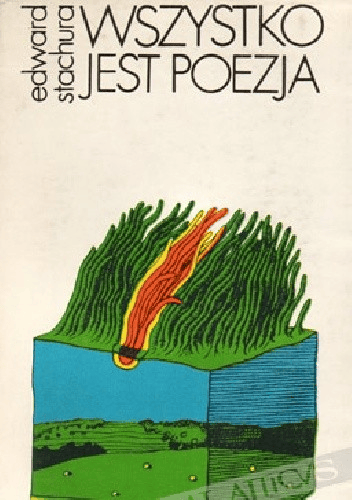
Many years ago, in the distant 1970s, an outstanding Polish poet of the postwar generation, practically unknown to the American reader, Edward Stachura, wrote:
“Everything is poetry, everyone is a poet. To grasp this truth, I was slowly led by what I had seen, heard, recognized, noticed, or sensed, what was cursed and blessed, and what I read here and there. Everything is poetry; everyone is a poet.”
As a young girl, I strongly believed in this statement, which is why I started to write poems. These poems remain unpublished, and perhaps that is for the best. I wrote mostly love poems because, as a novice poet, an apprentice, I was perpetually (and unhappily) in love, and poetry seemed the best way to express sadness, longing, disappointment, moments of sudden happiness, fleeting glances, and thrills. My vocabulary was perhaps richer than that of an average teenager, but when I compared myself with other poets, not necessarily with the recognized ones, I thought my poems were miserable and shallow. And even more: my wild, untamed imagination lay dormant within me. I lacked the courage to rearrange familiar worlds, to replace the known with what emerges in an incomprehensible flash of the heart and mind.
Then life, its banality and commonness, political grayness, and the hopelessness of the country I come from healed me from believing that “everything is poetry.” Immersed in ordinariness, I did not have time to stop and keep silent for a shorter or longer moment. It took many years for me to again start perceiving the world as an inexhaustible ocean of poetry and notice that every object, event, every pebble on the road, the twig of a blooming magnolia, a book left out on a desk, a husband’s shirt abandoned in a hurry, brown and blue tiles in the lobby of my house, crooked fences along Route 33 in Pennsylvania – all of this can be poetry.
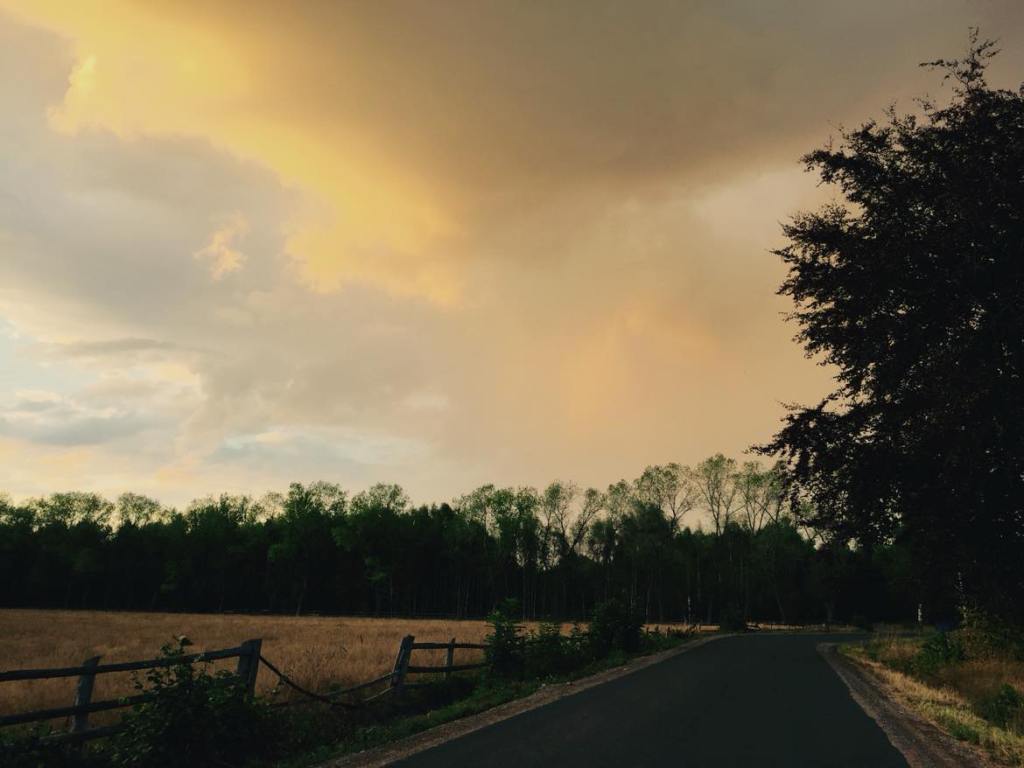
However, what does it take to start seeing these distinct elements of everyday life from this strange and unknown poetic side? How do you learn to look at the white round pebble to know the history of the road on which it lies? How do you talk about tenderness looking at a wrinkled blue male shirt? How can the white fence with flaky paint become what it is not at first glance?
Everything is poetry; everyone is a poet. What do we as poets need to see that is otherwise unseen in objects, people, landscapes? When do we know that what we saw is essential and worth remembering? In other words – how to become a poet?
First: Let go. Stop. Say nothing. The hustle and bustle in which we live, the rush that accompanies us, the noise, the constant speaking that surrounds us, the self-exclusion from the zone of silence – it all kills poetry in us. Therefore – stop. Listen to the silence. Allow yourself a moment in which your thought drifts across the immense ocean of poetry.
Then – open your eyes: look at people, trees, animals, houses. See colors, textures, refractions, shadows, a ray of sun falling at a different angle. Look around and try to understand that the world is not one-dimensional; that every thing, every person, and every meaning has a dual dimension – one that seems obvious and easy to guess and the one we have to imagine, discover, find. Nothing is what it appears to us at first glance.
Poetry needs tools. The tool is language and words, and in this respect, poetry is demanding and cruel. She hates trivial comparisons, and genitive metaphors used thoughtlessly and in excess. There is no mercy for clichéd phrases, fashionable symbols, and shallow exclamation marks. Poetry requires a language that avoids any linguistic patterns and shows the world in unknown circumstances.
And finally: Can one learn all of this from books with encouraging titles “And You Can Write a Poem” or “How to Write and Publish a Book of Poetry”? No. Such books probably can help somehow, but they help to become a craftsman rather than an artist. They can give their reader a false certainty that he or she is on the right path, if not to the Nobel Prize, then at least to the Griffin Poetry Prize, but this certainty will disappear after a week of waiting for a letter from the publisher that will never arrive. If something or someone can help a novice poet, it is only reading old poets. Their books stand on shelves in libraries – just come and reach for them. From Homer to Wordsworth, from Shakespeare to Ashbery, from Goethe to Milosz, from Dickinson to Szymborska, from Ezra Pound to Jarniewicz – you can find what will delight you and what will frighten you. Everything is here – in this large hall on the ground floor, to which the sun’s rays fall in the afternoon.
Let’s read poetry, not only on the occasion of April – the month of poetry. Read poetry every day – one poem read every morning will release sensitivity in us, and build a canon of our own private dazzles. If it leads us to a sheet of paper and a pencil – it’s good; one more poet will come to the world. If not – good too – one more poetry reader will save the world.
 Czwarte Miejsce