Od niemal roku uczęszczam w każdy poniedziałek na zajęcia kreatywnego pisania, organizowane przez Brooklyn Public Library, a prowadzone przez pewnego brooklyńskiego pisarza, Bena Dolnicka https://en.wikipedia.org/wiki/Ben_Dolnick. Dostajemy temat i 15 minut i potem głośno czytamy to, co napisaliśmy i dyskutujemy. Co ważne – każdy może dołączyć do grupy i w każdy poniedziałek ćwiczyć pisanie po angielsku.
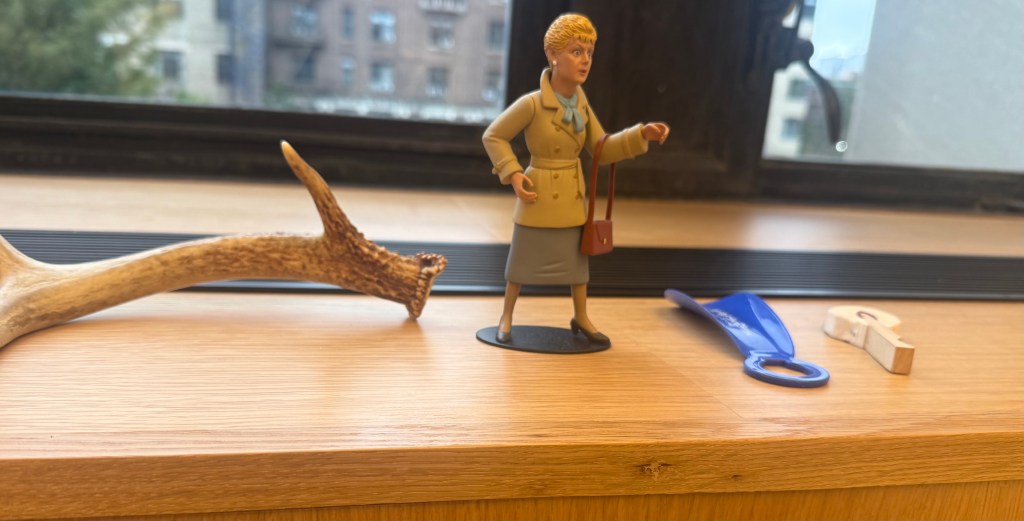
Dziś Ben pokazał nam kilka przedmiotów, które są widoczne na zdjęciu, polecił wybrać jeden i napisać krótkie opowiadanie, którego pomysł wywołała jedna z tych rzeczy. Powiem szczerze, że niezwykle bawią mnie te zajęcia i jednocześnie uważam, że są one niezwykle stymulujące. Próba wyrażania myśli w literackiej formie w obcym języku stanowi wyzwanie i jednocześnie sprawia mi niezwykłą przyjemność. Myślę, że od kiedy jestem w tej grupie moja umiejętność pisania po angielsku znacznie się poprawiła, pewnie też i dzięki temu, że w tej grupie panuje tak fajna atmosfera… W grupie jest około 20 osób i – co ważne – wiele z nich mówi z akcentem… Poniżej moje opowiadanie. PS. Zwróćcie uwagę jak po angielsku nazywa się gra w pikuty – to jedna z dwóch czy trzech rzeczy, które musiałam sprawdzić w słowniku…
Opowieść o dorastaniu i o butach
A Story about Growing Up and Shoes
I was perhaps eight or nine and grew at an alarming rate. I wasn’t merely growing. I was shooting up, rapidly overtaking the neighborhood boys I used to play mumblety-peg with. This was gratifying. What was considerably less gratifying was that my feet seemed determined to keep pace with the rest of me.
It was just before Easter and, as custom dictated, my mother had bought me a new spring outfit: a smart little trench coat and a pair of new shoes, carefully coordinated with it. There was no question of simply buying a child a coat or a pair of shoes in those days. Things had to match. The shoes belonged with the trench, the trench belonged with spring, and the whole ensemble was meant to present to the world a properly turned-out little girl. I was also wearing a huge ribbon on my head.
It was Good Friday, a day filled with solemn reflection, sadness, and fervent prayer. My Mom and I were sitting on the hard wooden pews of our local Neo-Gothic church, a dark, cavernous place that on that day seemed even colder and gloomier than usual. The Stations of the Cross were underway. The adults around me were absorbed in prayer, kneeling and rising at the appropriate moments, while I was rapidly running out of things to occupy myself with.Then I discovered a pencil in my pocket.
Continue reading “Wtorek, 29 września 2026”